
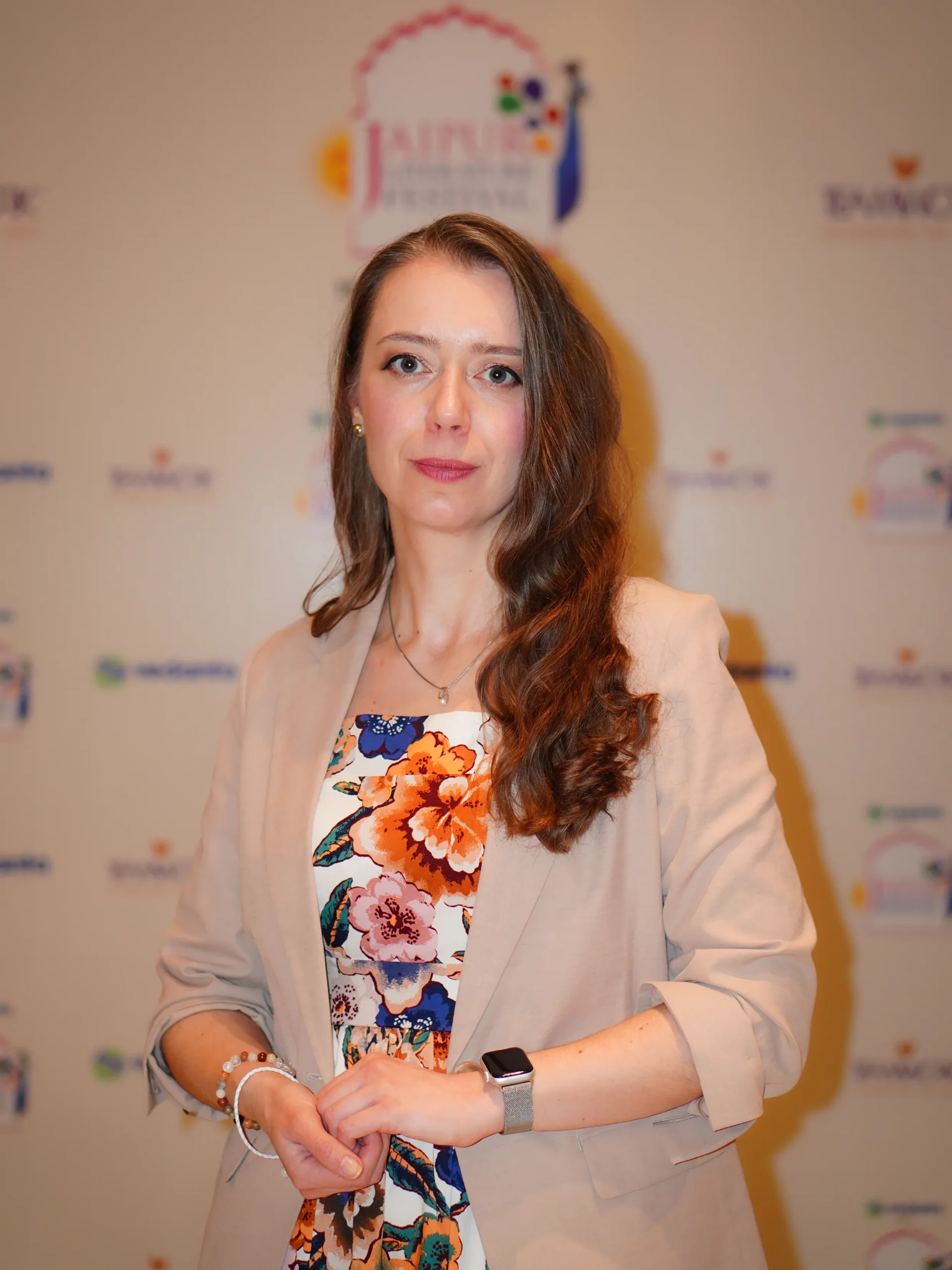
Yuliya Musakovska: Ukrainian Poet, Award-Winning Writer and Voice of Contemporary Ukrainian Literature
Discover the life, poetry, books and international literary work of Yuliya Musakovska, the Ukrainian poet and translator bringing Ukrainian voices to readers around the world.
Yuliya Musakovska is a Ukrainian poet, writer and translator whose work explores freedom, identity and the human experience of war. Born in 1982 and based in Lviv, she is a member of PEN Ukraine and the author of six poetry collections. Her poems have been translated into more than 30 languages, introducing international readers to contemporary Ukrainian literature.
Alongside her own writing, Musakovska translates poetry and supports initiatives that bring Ukrainian writers, including poets serving in the armed forces, to audiences beyond the country’s borders.
Her work offers readers a way to explore Ukraine through poetry, cultural expression and the experiences of people living through a period of profound historical change.
Who Is Yuliya Musakovska?
Yuliya Musakovska is a Ukrainian poet, writer and literary translator who lives in Lviv, a major cultural centre in western Ukraine. She holds a master’s degree in international relations from Ivan Franko National University of Lviv and is a member of PEN Ukraine, an organisation that supports literature, freedom of expression and cultural exchange.
Before focusing on literature and cultural advocacy, Musakovska spent approximately 20 years working in information technology and international business. In 2023, she paused that career to concentrate on writing and on promoting Ukrainian culture internationally.
Her career brings together literature, translation and international engagement. Through poetry collections, literary publications and collaborative projects, she contributes to the visibility of Ukrainian writing in the global literary community.
Yuliya Musakovska’s Poetry Collections
Musakovska has published six poetry collections over more than a decade. Her books explore personal experience, relationships, identity and the changing realities of contemporary Ukraine.
Her collections include:
- Exhaling, Inhaling (2010)
- Masks (2011)
- Hunting for Silence (2014)
- Men, Women and Children (2015)
- The God of Freedom (2021)
- Stones and Nails (2024)
Together, these books form an important part of her literary contribution. They also give readers a starting point for discovering contemporary Ukrainian poetry through a writer whose work has reached audiences in numerous languages.
The God of Freedom: A Ukrainian Poetry Collection
One of Musakovska’s best-known collections is The God of Freedom, first published in Ukrainian in 2021.
The English-language edition was published by Arrowsmith Press in the United States in 2024. The translation was produced by Olena Jennings in collaboration with Musakovska.
The collection was shortlisted for the Lviv UNESCO City of Literature Prize and advanced to the second round of consideration for Ukraine’s Taras Shevchenko National Prize in 2024. It was also included in The Kyiv Independent’s selection of the top 10 Ukraine-related books.
Its engagement with freedom takes on particular significance in the context of Ukraine’s recent history. For readers encountering Ukrainian literature in translation, books such as this show how political and historical uncertainty intersects with private lives and individual experience.
For international audiences, The God of Freedom is an accessible entry point into Musakovska’s writing and the wider landscape of contemporary Ukrainian poetry.
Stones and Nails: Exploring Contemporary Ukrainian Literature
Published in Ukraine in 2024, Stones and Nails is another significant collection in Musakovska’s body of work.
It has also reached international readers through translation. Its Swedish edition, Stenar och spik, was published in 2024 in a translation by Mikael Nydahl and Susanna Witt.
The book’s international publication reflects the growing connections between Ukrainian literature and readers across Europe. Translation allows literary works to travel beyond the language and cultural setting in which they were first written.
Readers interested in contemporary Ukrainian poetry can read Stones and Nails alongside Musakovska’s earlier collections to follow the development of her writing and its engagement with the experiences of contemporary Ukraine.
Yuliya Musakovska’s International Literary Awards
Musakovska’s work has received recognition from literary organisations in Ukraine and abroad.
In 2025, she received the Asian Prize for Poetry for her poem Natural Disaster, in a translation by Olena Jennings.
She also received the Diana Der-Hovanessian Prize from the New England Poetry Club in the United States in 2025. According to PEN Ukraine, this award recognised her translation of poetry by Maria Tytarenko.
These distinctions recognise different aspects of her literary contribution: her own poetry and her work as a translator.
Translation is an important part of international literary exchange. It enables readers to experience poetry written in languages they may not understand and helps writers reach audiences beyond their home countries. Musakovska’s awards reflect her participation in this exchange as both a poet and a literary translator.
Translating Ukrainian Voices for the World
Musakovska’s contribution to literature extends beyond her own poetry collections. She translates Swedish poetry, particularly the work of Tomas Tranströmer, and also translates contemporary Ukrainian poets into English, including writers serving in Ukraine’s armed forces.
One notable project is We Were Here, a poetry collection by Ukrainian soldier and poet Artur Dron. Published in English by Jantar Publishing in November 2024, the book was translated by Musakovska.
The collection brings the writing of a Ukrainian serviceman to readers outside Ukraine, offering a literary perspective on the experience of the country’s war.
Her translation work shows how literature can create connections across languages and national borders. It also introduces international audiences to Ukrainian writers whose work might otherwise remain inaccessible to them.
Lines of Resistance: Supporting Ukrainian Wartime Poetry
Musakovska is a co-founder of Lines of Resistance, an international initiative developed through collaboration between the University of Exeter in the United Kingdom and the UNESCO Cities of Literature of Lviv and Exeter.
The project focuses on translating, publishing and promoting poetry by Ukrainian soldiers and activists.
Its work creates opportunities for Ukrainian writers to reach international readers through literary translation, publications and cultural events. It also contributes to a wider effort to document and share contemporary Ukrainian literary voices.
For Musakovska, this work complements her own writing and translation. It places individual poems within a broader cultural conversation about literature, memory and the experiences of people living through war.
Rather than approaching Ukraine solely through political or military reporting, readers can encounter the country’s literary culture through the voices of the people writing within it.
Why Yuliya Musakovska Matters to Contemporary Ukrainian Literature
Literature offers a different perspective on a country from the one provided by headlines and breaking-news reports. It allows readers to engage with language, cultural identity and personal experience in ways that factual reporting alone cannot always capture.
Musakovska’s poetry and translation work contribute to this perspective by connecting contemporary Ukrainian writing with readers across the world.
Her career illustrates two important dimensions of international literature. The first is the creative work of the poet, whose collections explore experiences shaped by personal and historical circumstances. The second is the work of the translator and cultural advocate, who helps other writers reach new audiences.
Her poetry has been translated into more than 30 languages, and her work has appeared in international literary journals, including The Southern Review, Tupelo Quarterly, The Common and AGNI. These publications give readers additional routes to discovering Ukrainian poetry and contemporary literary voices from the country.
Discovering Ukraine Through Poetry
Yuliya Musakovska’s literary journey connects Lviv with a wider international community of poets, translators, publishers and readers.
From The God of Freedom to Stones and Nails, her collections offer a way to discover a Ukrainian writer whose work has travelled across languages and borders. Her translations and her involvement in Lines of Resistance extend that contribution by helping other Ukrainian poets reach international audiences.
For readers interested in Ukraine, European literature and the relationship between culture and contemporary history, Musakovska’s work is a valuable starting point.
Poetry cannot replace journalism or historical research, but it can complement them by creating space for individual voices, language and literary expression. Through her writing and translation, Yuliya Musakovska contributes to the continuing conversation between Ukrainian literature and the world.
This article is an editorial profile based on published biographical and literary sources. It is not an interview with Yuliya Musakovska.