
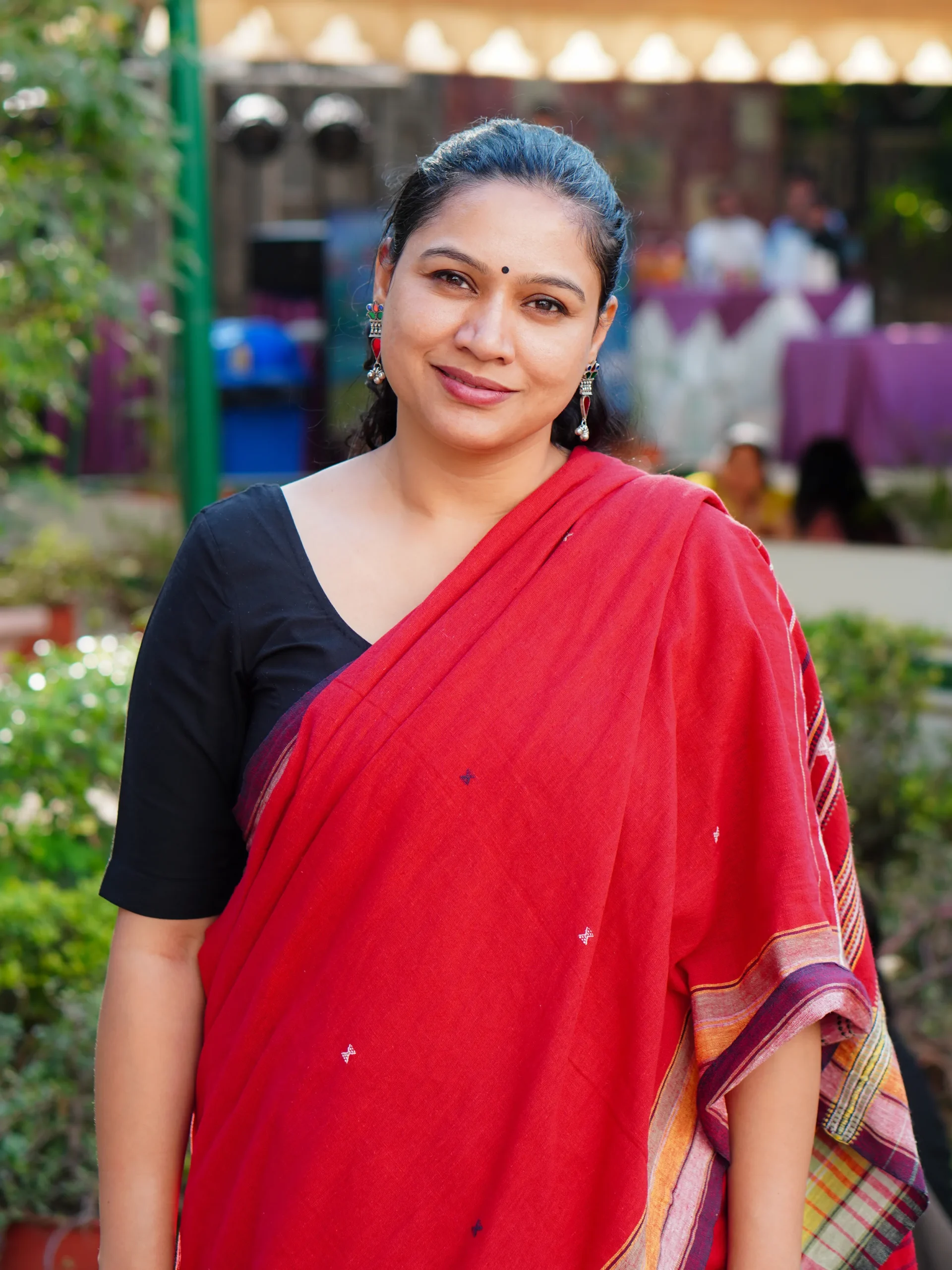
Neha Dixit: The Journalist Who Brings India’s Invisible Lives Into Focus
At the Jaipur Literature Festival 2025, I met Neha Dixit, an award-winning investigative journalist and author. Her work looks beyond headlines. It uncovers the human stories behind inequality, power and social injustice.
Some stories dominate the news for a day. Others stay hidden for years. Political noise, institutional indifference and daily struggle bury them. However, Neha Dixit has built her career around finding these stories and bringing them into public view.
I met her at the Jaipur Literature Festival 2025, one of India’s most celebrated gatherings of writers and thinkers. The festival ran from 30 January to 3 February at Hotel Clarks Amer in Jaipur. Voices from across the world gathered there to explore literature, culture, politics and society. Her work deserves attention well beyond a single festival. Above all, it raises an essential question: whose stories are we overlooking, and what does that say about our society?
Neha Dixit: An Independent Journalist Committed to Investigative Reporting
Neha Dixit has more than a decade of experience in independent journalism. As a result, she is now a prominent voice in investigative and long-form reporting. Her work explores gender, caste, class, politics, religion and social justice. In particular, she examines how power affects people at the margins of society.
She began her career at Tehelka. Later, she worked with the Special Investigation Team at India Today. Since 2012, she has worked as a freelance journalist. Her articles have appeared in The Wire, Outlook, The Caravan, Al Jazeera, The New York Times and The Washington Post.
Her investigations cover alleged human rights violations, human trafficking and police violence. They also examine unethical clinical trials involving economically vulnerable people. In addition, she reports on the effects of religious and political polarisation. These subjects demand patience and rigorous verification. They also require a willingness to confront uncomfortable realities.
For Dixit, investigative journalism does more than uncover information. It also documents the lives of people who might otherwise remain invisible.
The Many Lives of Syeda X: The Story of an Unknown Indian
Juggernaut Books published Dixit’s first non-fiction book in India in 2024. Its title is The Many Lives of Syeda X: The Story of an Unknown Indian.
The book follows Syeda, a Muslim migrant woman who lives and works in Delhi. Through her life, it examines India’s social, political and economic changes. Years of research went into the book. As a result, it offers a close look at informal labour, migration, gender inequality and poverty. It also shows the precarious reality of working-class life.
However, the book does not present Syeda’s story as an isolated struggle. Instead, her experiences raise wider questions about economic growth, urbanisation and communal tension. She takes on many kinds of work to support her family. Meanwhile, jobs stay uncertain, wages stay low and security stays fragile.
The strength of the book lies in its focus on one woman. Dixit connects national developments to Syeda’s daily decisions, hardships and hopes. Moreover, Syeda is not a symbol of poverty or a passive victim. She has agency, contradictions, relationships and ambitions.
Consequently, the book invites us to rethink how we tell the story of a country. Can we understand India only through its economy, its leaders and its growing cities? Or must we also listen to the people whose labour sustains them?
Journalism That Looks Beyond the Headlines
Throughout her career, Neha Dixit has investigated issues that demand more than a passing glance:
- 2014–2015: Her reporting on survivors of sexual violence after the 2013 Muzaffarnagar riots won the Kurt Schork Award in International Journalism (2014). It also won the Press Institute of India–Red Cross award (2015).
- 2016: She investigated the abduction of 31 girls from Assam by a Hindu nationalist organisation. The story drew wide attention and led to a criminal defamation case against her. Afterwards, the Committee to Protect Journalists raised concerns about legal action that intimidates journalists.
- 2018: She reported on the alleged unethical recruitment of poor Indians into illegal pharmaceutical drug trials.
- 2019: Her reporting on alleged extrajudicial police killings in Uttar Pradesh and other states highlighted concerns about police accountability. That same year, the Committee to Protect Journalists gave her its International Press Freedom Award.
Together, these investigations show what the work demands. Journalists must establish facts, examine evidence and question official accounts. Then they must give readers the information they need. At the same time, the work shows the pressure journalists face when their findings challenge powerful institutions.
From Investigative Reports to Literary Storytelling
A news report documents an event or exposes a specific wrongdoing. A book, on the other hand, can follow people across years. It also places their experiences within a broader social and historical context.
In The Many Lives of Syeda X, Dixit brings the discipline of investigative journalism into literary non-fiction. She combines research, social observation and sustained documentation of one woman’s life.
Her writing also challenges a familiar divide. People usually link journalism with fact and immediacy. In contrast, they link literature with character and emotion. Dixit shows that carefully researched non-fiction can offer both.
Her work has also appeared in anthologies. These include First Hand: Graphic Non-fiction from India and Breaching the Citadel, which examines sexual violence in South Asia. Furthermore, The Many Lives of Syeda X won the Kalinga Literary Award for Best Debut in 2025. The award strengthens her place in contemporary Indian non-fiction.
Meeting Neha Dixit at the Jaipur Literature Festival 2025
The Jaipur Literature Festival turns books into conversations about the world. Writers, journalists, scholars, artists and readers meet there. Therefore, it offers a rare chance to encounter ideas beyond everyday life.
Meeting Neha Dixit at the 2025 festival was a special opportunity for me. It connected my interest in storytelling with a journalist who documents difficult realities.
I am building Nomad Vikas around travel, people, places and stories. For this reason, I believe storytelling should go beyond landscapes and destinations. Travel introduces us to new places. Thoughtful storytelling, however, asks us to look further. It encourages us to notice the people who live there and the circumstances that shape their lives.
Dixit’s work reminds us of this responsibility. The person behind a statistic has a story. So does the family behind a headline and the worker behind an everyday product.
Why Neha Dixit’s Work Matters Today
News cycles move fast today. Social media debates and polarised conversations fill our feeds. In this environment, investigative journalism plays a vital role. It establishes facts and examines the consequences of power.
Moreover, a story’s value does not depend on how widely it spreads. It also lies in the questions it raises and the evidence it reveals. Equally important, it helps us understand people. Dixit’s reporting asks readers to look beyond easy explanations. Her book shows how one life connects to the larger systems around it.
Most importantly, her work challenges a common idea. A life does not need to be famous, powerful or exceptional to deserve attention. Syeda’s experiences matter because they reflect the realities of many people. Public discourse often leaves out their names and struggles.
Final Thoughts: The Power of Stories That Deserve to Be Heard
Meeting Neha Dixit at the Jaipur Literature Festival 2025 linked a literary gathering to a larger question. What is the purpose of storytelling?
Investigative journalism, long-form reportage and non-fiction books can all reveal hidden realities. They challenge assumptions and preserve experiences. In addition, they encourage readers to question what they have always taken for granted.
At Nomad Vikas, documenting people and their stories is essential to understanding the world. Neha Dixit’s work reinforces the importance of listening to voices we often overlook.
Sometimes the most important stories do not command the loudest attention. Instead, they are the ones we have overlooked all along. In the end, understanding a country can begin with listening to one person whose story might never have been told.